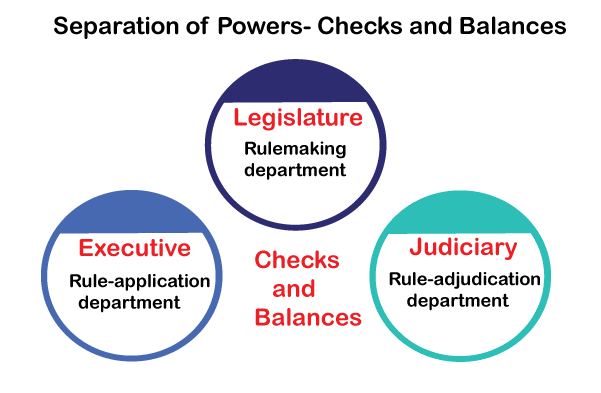
Indian constitution embraces idea of SoP in an implied manner—Reasonable & flexible SoP—Principle of “Checks & balances”
Bcz of Parliamentary Govt– India does not follow an Absolute separation– Exe is part of legislature & also is responsible to legislature + courts can strike down unconstitutional amendments made by legislature.
Objectives
To ensure that diff branches of Govt shd work autonomously with minimal interference from others.
Reduces over-centralisation of power in any branch + ensure checks & balance
Importance of SoP
Imperative for smooth functioning of vibrant democracy–checks & balances prevent abuse of power
GRM through Independent judiciary.
Executive remains A/C to Leg for implementation of policies
Rule of law + Checks arbitrariness
Functional Overlap
Overlapping Powers Of Legislature
With Judiciary
With Executive
Impeach of Prez
Removal of judges.
Punish for breach of its privilege
Ministers are members of leg.
Prez Impeachment
Overlapping Powers Of Executive
With Judiciary
With Legislative
Judicial app
Art 72
Tribunals & QJBs— discharge judicial functions.
Ministers r members of Leg.
Ordinance
Delegated legislation.
Judicial pronouncements
KBC — SoP is part of basic structure
Indira Gandhi vs Raj Narain– In Indian Const, there is SoP in a broad sense only—A rigid SoP as in America does not apply to India